


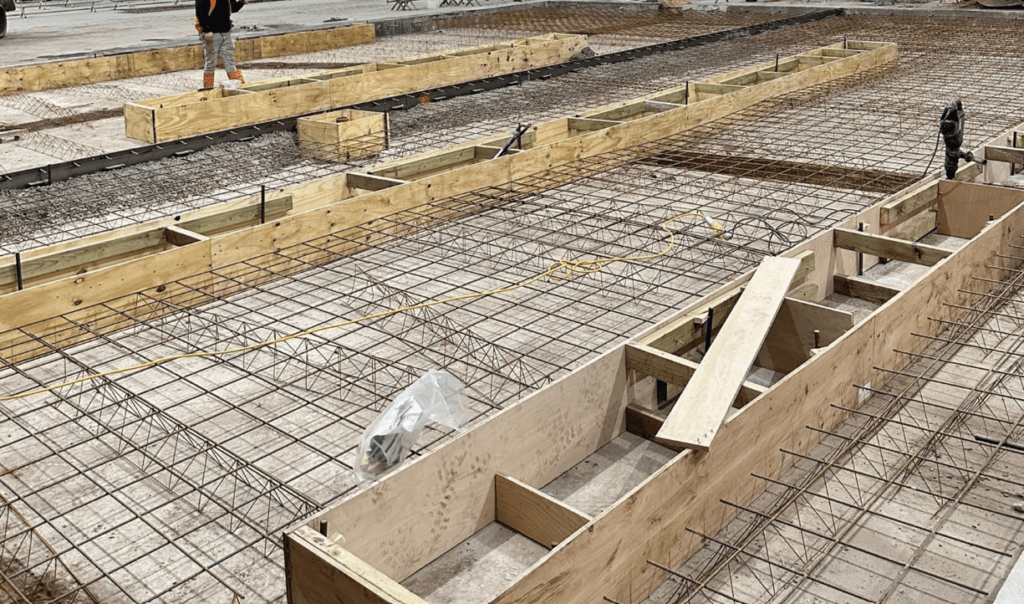
AM Fresh, a global agrifood and biotechnology group that manages the entire fresh food value chain, needed a new production line to meet an increased demand for orange juice.
Stockton Group was appointed by construction company Lindum to construct the supporting infrastructure for the new production line at its Skelmersdale facility, including drainage and structural and external works as part of a building extension.
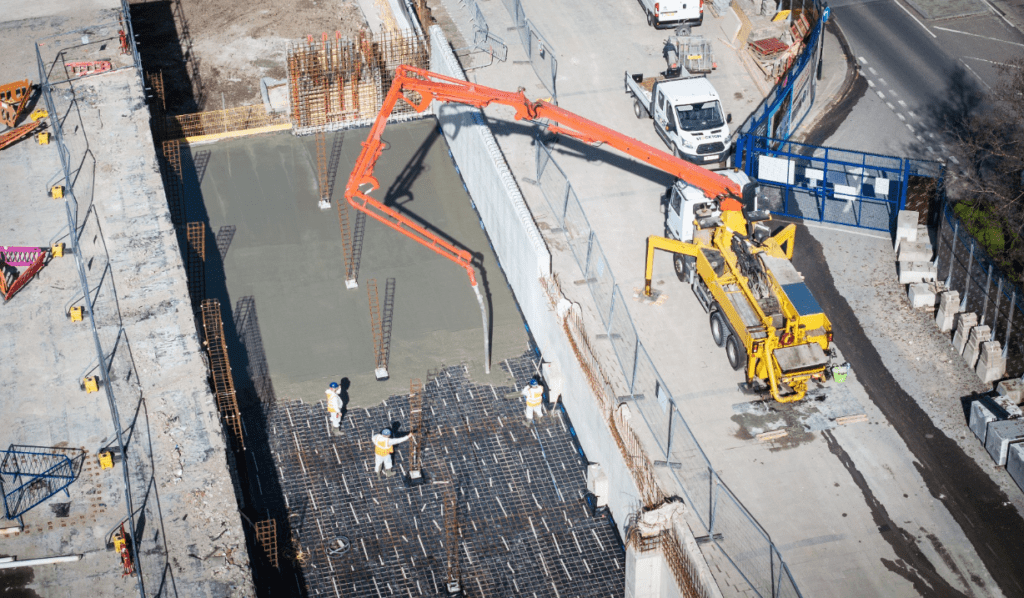
The £36 million redevelopment of Rotherham Markets started in 2024, and is set to be completed in 2027.
Stockton Group was appointed by Henry Boot Construction to complete a wide range of works throughout the project, which is still ongoing. The first phase began in February 2024, starting with the basement for the outdoor covered market, before feeding into works to incorporate the new library.
In part two of this case study, which will be published later in 2026, we’ll look at the next phase of the works, including the installation of drainage, as well as landscaping on the site.
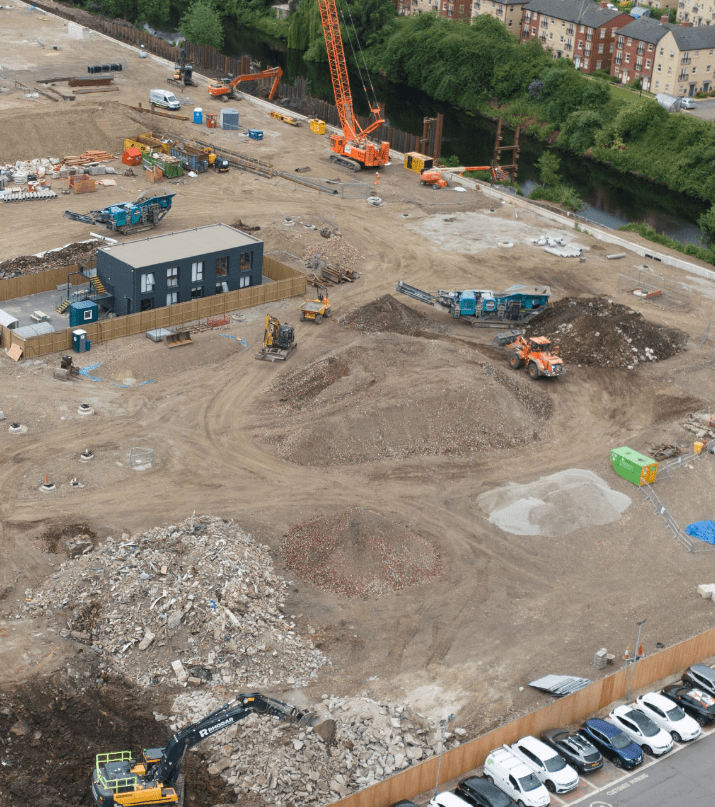
A new development consisting of apartments, restaurants, and play areas was being constructed on the outskirts of Leeds on Kirkstall Road, helping to manage the growing population and demand for housing near the city centre.
Stockton Group was appointed by Rhodar, a leading specialist enabling works firm, to deliver a drainage network, construct riverside headwalls, and complete road mapping, ahead of full construction of the development taking place.
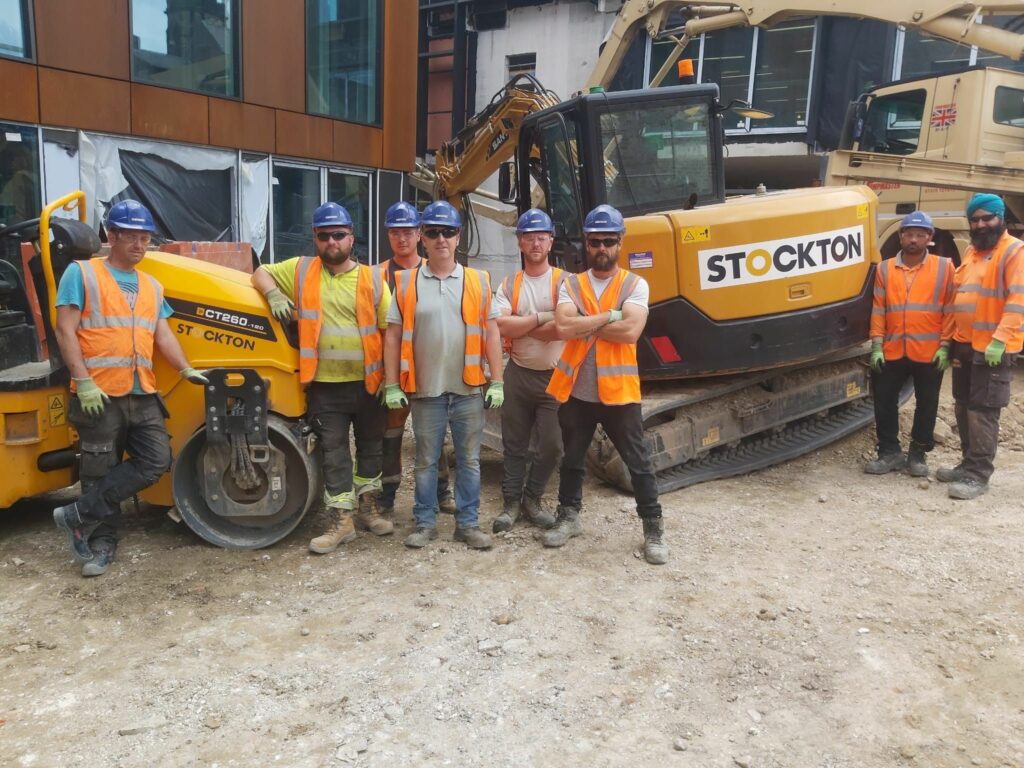
'Heart of the City’ is Sheffield’s 17-acre, £470 million regeneration district, featuring workspaces, apartments, recreational areas, and restaurants.
Stockton Group was contracted by Henry Boot Construction to carry out initial works on the site of a new office block, covering drainage installation, the construction of foundations for recreational areas, and soft landscaping.
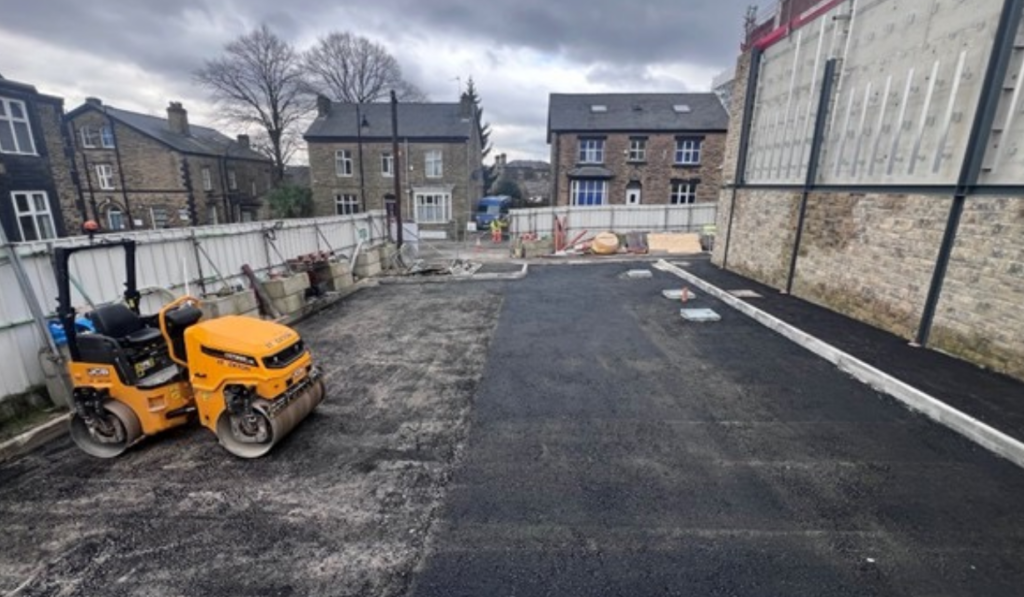
To support the completion of a new treatment building and associated car park at Weston Park Hospital, Henry Boot Construction commissioned a comprehensive civils package as part of the external development works.
Stockton Group was appointed to deliver the civil engineering scope, undertaking retaining structures, drainage installations, surfacing, utility connections, and external finishing works. The project required precise planning and flexible delivery to overcome steep site levels, restricted access, and constrained city-centre working conditions.
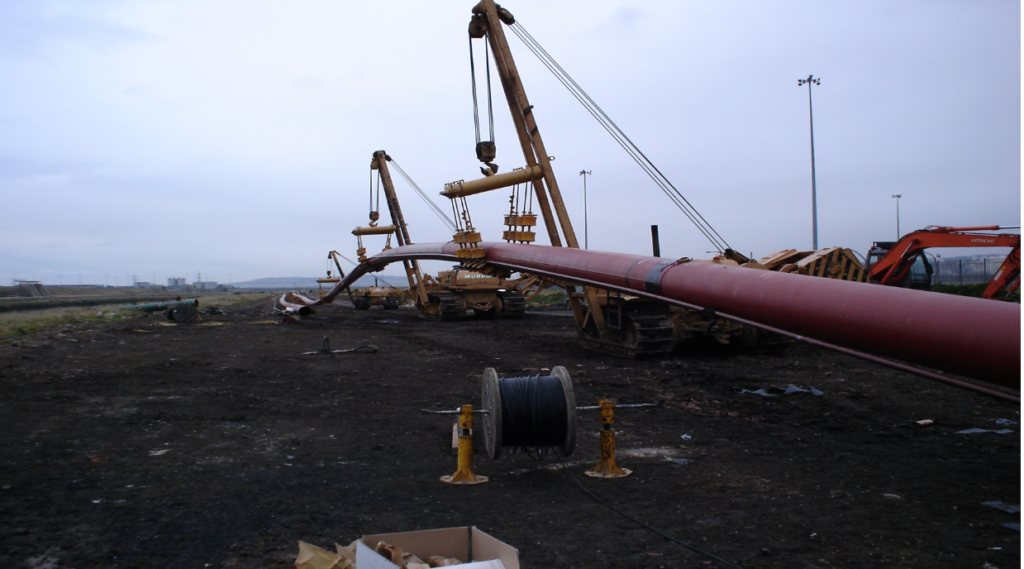
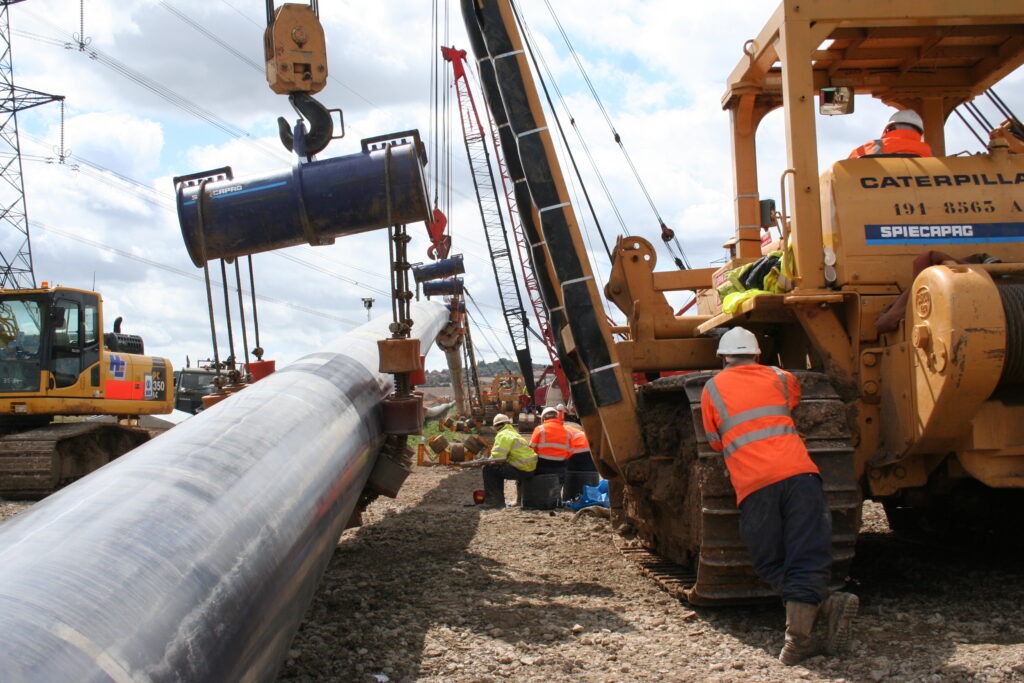
The Teesside Gasport project was a landmark project in the UK’s energy infrastructure, enabling the importation of liquefied natural gas (LNG) via the River Tees. Delivered as part of a fast-track programme for Excelerate Energy, it required precision engineering and reliable delivery to meet strict operational deadlines.
Stockton Group was contracted to deliver a 1km Horizontal Directional Drill (HDD) river crossing for a high-pressure gas pipeline, alongside associated fibre optic control systems, as a critical path element of the wider Gasport development.
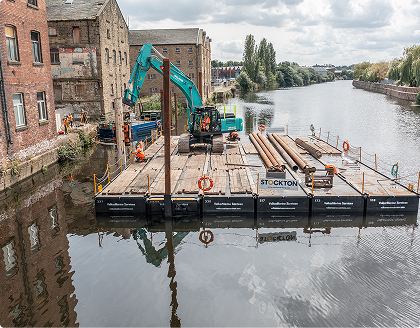
The Rutland Mills and Tileyard North regeneration is one of the most significant heritage-led development projects in the North of England, set to transform ten acres of Wakefield’s historic riverside into a major cultural destination. As part of the wider masterplan, City & Provincial Properties commissioned a complex civils and river infrastructure package to protect the site from future flood events and unlock the next
Stockton Group was appointed as principal contractor to deliver the works, undertaking flood defence structures, river engineering, drainage infrastructure, reinforced concrete works, and associated repairs to existing buildings. The project required specialist planning, environmental approvals from the Environment Agency and the Canal & Rivers Trust, and innovative construction methods to safely deliver works both on land and within the River Calder.
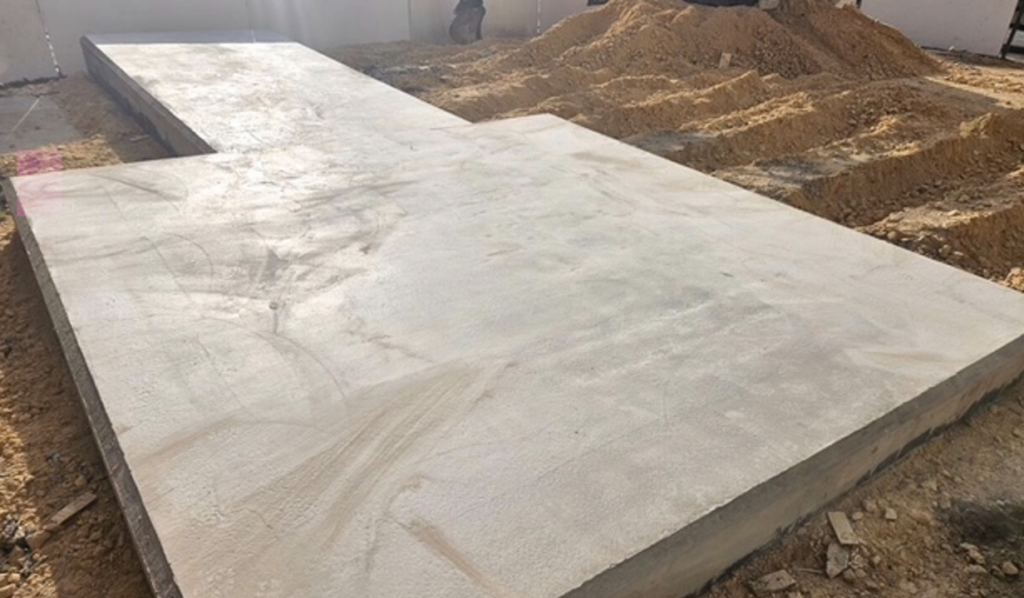
New fire protection cladding was needed for the exterior of Manor and Trinity House in Wakefield, as part of a high-rise building safety upgrade.
As part of the external wall insulation (EWI) programme Kier Construction commissioned a specialist civils package to support the installation of this cladding.
Stockton Group was appointed to deliver the civil engineering scope, undertaking the site preparation, setting out, reinforced concrete works, and external enabling works. The project required careful logistical planning and close stakeholder coordination to maintain public access while working within live bus lanes and busy pedestrian routes.
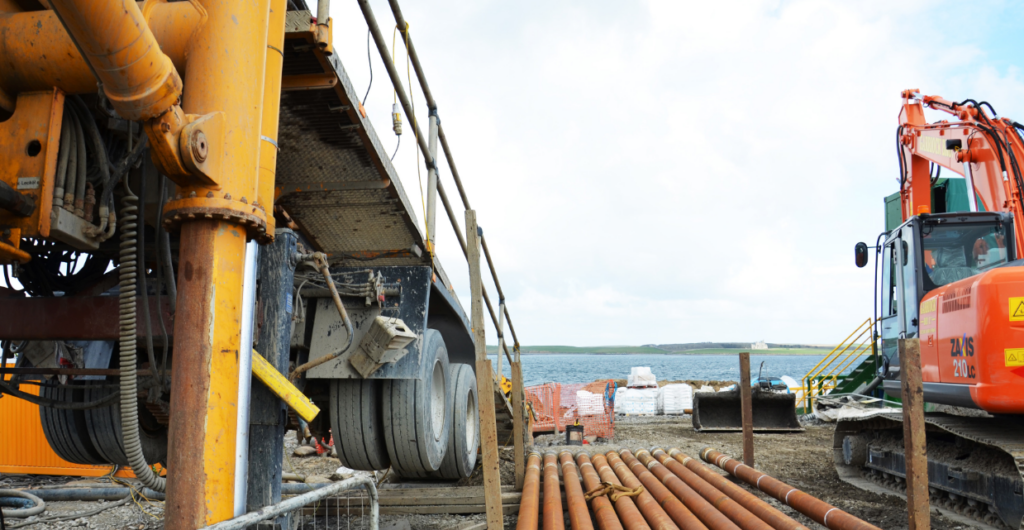
The Shapinsay subsea pipeline project in the Orkney Islands represents a critical infrastructure upgrade aimed at providing a reliable, long-term water supply to one of Scotland’s remote island communities.
Delivered for Scottish Water, the scheme involved installing a subsea pipeline between mainland Orkney and the island of Shapinsay, ensuring a secure and improved water source following declining water quality on the island.
At just under 2km in length, the crossing is believed to be the longest land-to-land, subsea, directionally drilled utility pipeline in the UK.
Stockton Group was brought in use our drilling expertise to work through difficult geological conditions, while meeting the challenges of working in a remote environment.
