



WORKING WITHIN THE RIVER CALDER
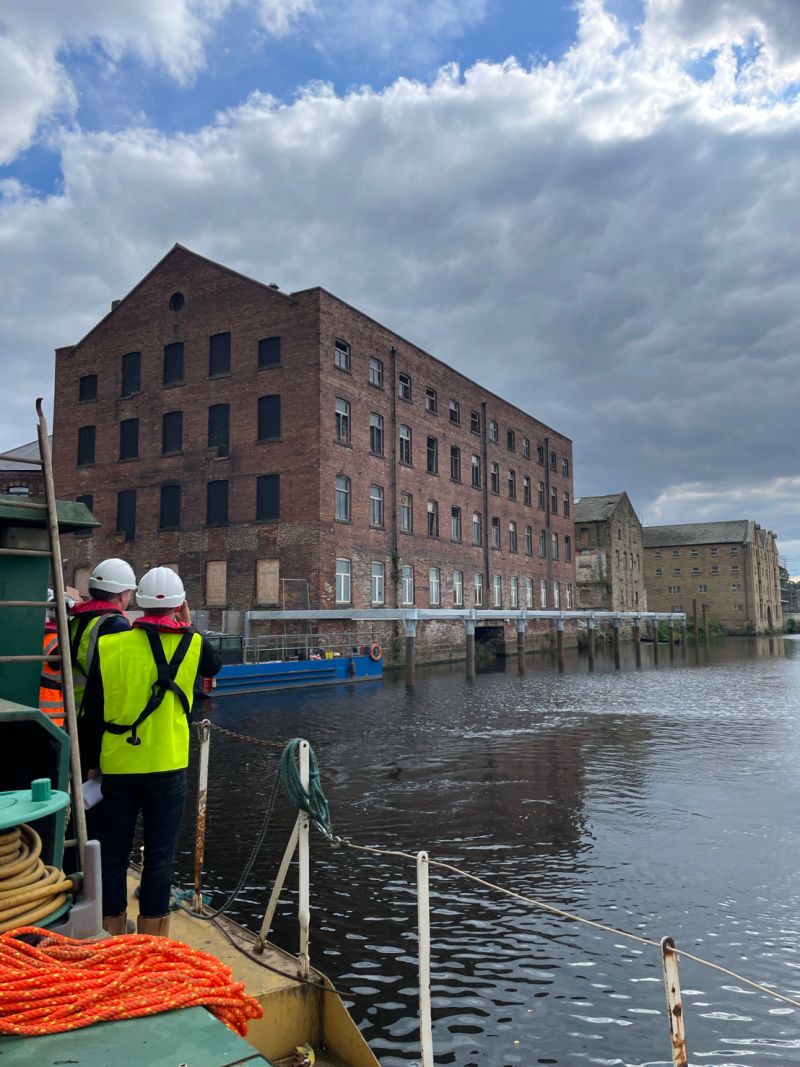
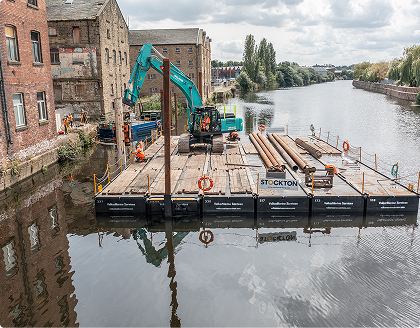
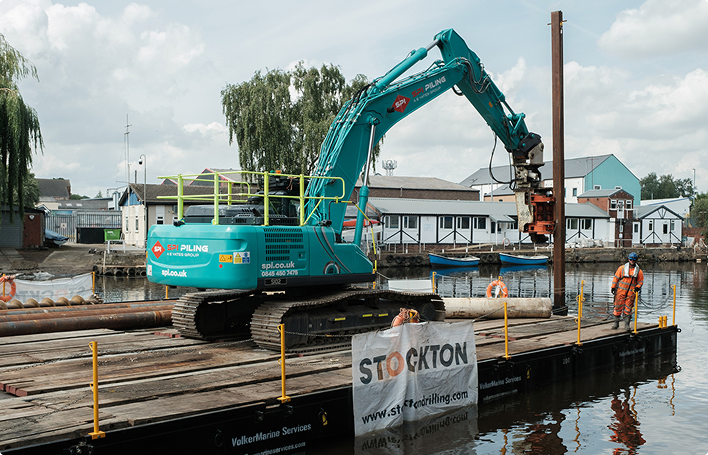
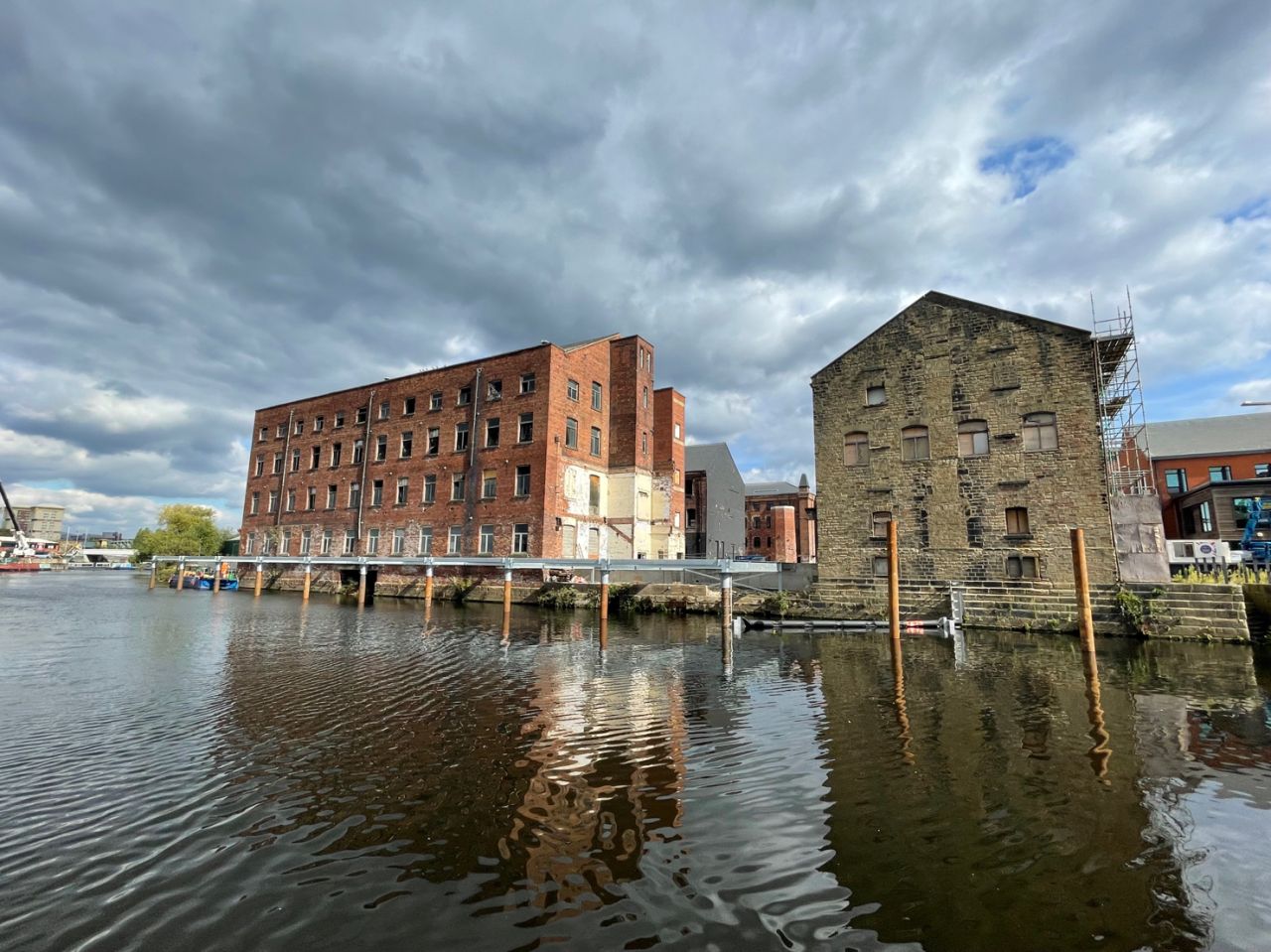
The most technically demanding element of the project was the construction of the piled stainless-steel walkway within the river itself. Steel tubular piles and the walkway structure were installed from floating pontoons and service vessels, with all works supervised and approved by the Environment Agency and the Canal & Rivers Trust throughout.
Stockton secured the necessary environmental consents from inception, working with the design team - Civic and Hawkins Brown - to identify a viable solution that protected the mills from future flooding while providing a floating river walkway over the Calder. Temporary flood protection was also installed to safeguard the construction programme.

REINFORCED CONCRETE AND DRAINAGE WORKS
On land, CFA piles provided the foundation for the two new RC flood walls, with PERI UK supplying specialist wall formwork to achieve the required structural finish and long-term flood resilience. The formwork system was integral to delivering the quality and accuracy demanded on a heritage setting.
Below-ground drainage, attenuation tanks, and a surface water pumping station were installed across the development, ensuring effective surface water management for the wider Rutland Mills scheme.
HEALTH, SAFETY AND ENVIRONMENTAL COMPLIANCE
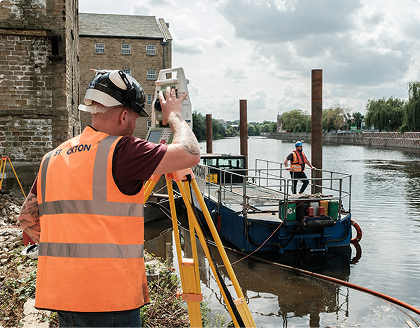
Operating within a live river environment, on a heritage site with complex logistics, required strict adherence to HSEQ procedures throughout. Stockton prepared and managed the construction phase Health & Safety Plan, held weekly site team briefings to address H&S concerns and near-miss reporting, and hosted regular visits from an external HSEQ auditor - achieving full compliance across the programme.
Despite two flood events during construction, the project was completed ahead of programme, on budget, and with zero accidents; a result that reflects the team’s focus on safe, disciplined delivery in a genuinely challenging environment.