
If you’re undertaking a civil engineering project in coastal or river environments, you need to account for flood control needs, and erosion risks, as well as the impact on local communities. Gearoid O’Connell looks at types of civil engineering projects that are undertaken next to water, the challenges that come with them, and what civils contractors can do to mitigate risks.


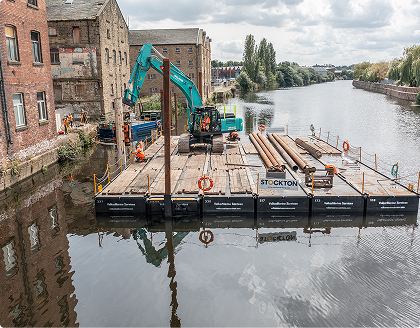

Waterway civil engineering projects involve the design, construction, and maintenance of infrastructure on or near the sea or rivers. These projects enable the continued navigation of waterways, while protecting local communities and habitats from rising water levels.
Types of waterway civil engineering projects can include:
- Riverbank protection: Effective riverbank maintenance involves both soft engineering and hard engineering. Soft riverbank protection uses natural materials like vegetation to absorb water and create habitats and is utilised in ecologically sensitive areas and lower courses of rivers where water flow is slower. Hard riverbank protection is used in areas where the current is stronger, featuring robust structures like sheet piling and stone-filled gabion baskets to prevent erosion and bank collapse.
- Flood defence: While regular riverbank maintenance reduces flood risk in the long term, sometimes temporary flood defences need to be put in place to protect infrastructure during construction or flood events. These defences can include gabions, barriers, and temporary drainage, all of which can be quickly deployed and dismantled when no longer needed.
- Marine sheet piling: This involves interlocking steel sheet piles in water to form a wall that helps stop river and canal banks from slipping into the water. It prevents erosion, and provides flood defence, while forming the foundation for docks, piers, and jetties.
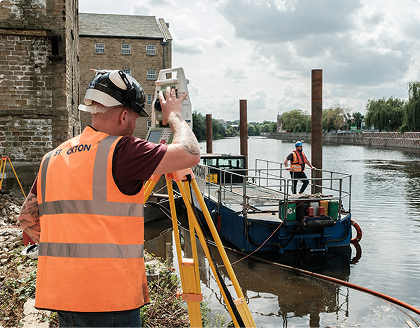
When you’re working on a project involving coastal and river environments, it’s important that you hire a specialist civils contractor or subcontractor with experience in waterway works. Whether you’re getting involved with riverbank protection and maintenance, or flood defence, working on and next to waterways carries multiple challenges.
Some of these complexities include:
- Site access: Accessing sites in coastal and river environments often presents logistical challenges, requiring specialised equipment and machinery like marine plant, crane barges, and workboats. Specialist contractors like Stockton Group are well-equipped to source these materials, while coordinating access to site and gaining all necessary permits to ensure projects start on time.
- Tidal and weather conditions: Waterway projects are susceptible to disruptive weather conditions, causing rising water levels and strong currents which can impact the feasibility of a project. You’ll need a contractor that knows how to deal with these conditions in real time, adjusting schedules to reduce downtime and keep the project moving forward even when the outlook seems stormy.
- Disruption to daily operations: Waterways often need to remain operational year-round and function whilst structural works take place. Experienced contractors are well versed in balancing project needs with the need to keep industry moving and will make the necessary site time and equipment adjustments to reduce disruption to businesses and the public.
- Environmental sensitivity: One of the most important considerations when undertaking a coastal or river project is protecting the delicate ecosystems next to and within our waterways. Any work conducted must be done in line with environmental regulations, requiring the expertise of a specialist contractor like Stockton which has experience assessing and mitigating risks.
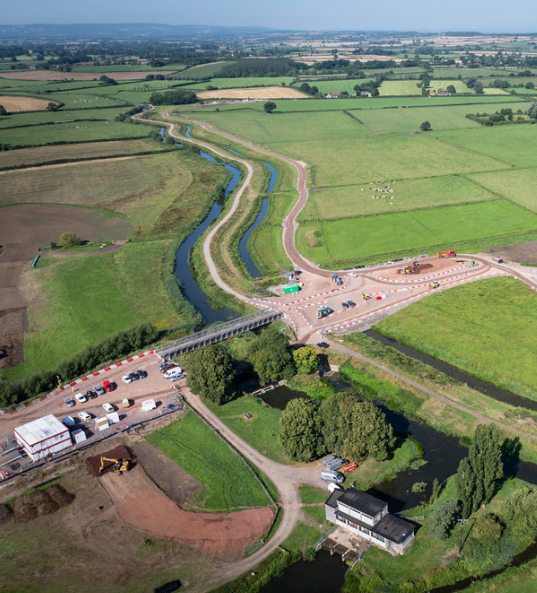
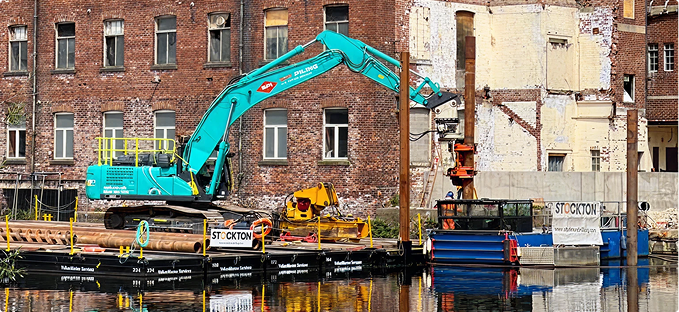
Here at Stockton Group, we acted as the principal contractor for a project involving urgent river works on the River Calder. The project was focused on the section of the river that runs through Wakefield, past the formerly derelict building Rutland Mills, where the creative community Tileyard North is based.
We worked to protect Rutland Mills from future flooding events, by constructing two new reinforced concrete (RC) flood walls, which can withstand rising water levels and stop the river from overflowing during heavy rainfall periods.
These flood defences formed a key part of the overall restoration of the mills which was being undertaken, ensuring the buildings were future-proofed for years to come.
Utilising equipment, including floating pontoons and service vessels, we also installed a stainless-steel walkway over the river with steel tubular piles to allow public access along the river’s edge.
Overall, the river works played a key part in the continued ongoing works to restore the mill site, helping to give the riverside a new lease of life and see Rutland Mills cement itself as a cultural destination for years to come.
Civil engineering projects in coastal and river environments can be complex, but with the right contractor, challenges such as managing flood risk, disruption, and environmental sensitivity can be handled with ease. If you want an experienced firm to handle everything from planning waterway works, to executing maintenance and construction, get in touch with the Stockton team today.
Waterway civil engineering involves the design, construction, and maintenance of infrastructure on or near the sea or rivers.
Types of waterway civil engineering projects can include riverbank protection, flood defence, marine piling, and other structural works in and around waterways.
Maritime civil engineering involves the design, construction, and maintenance of infrastructure near the sea, including projects like coastal protection.
When working on or near water, civil engineers need to consider site access, tidal and weather conditions, minimising disruption to daily operations, and environmental sensitivity.

