
As the UK energy sector moves towards hydrogen to meet net zero goals, pipeline contractors will be expected to play their part in building new pipelines and repurposing existing ones. Gearoid O’Connell explores how strategic coordination with the Government and industry bodies, as well as investing in skills and training, will help pipeline contractors get ready to deliver better energy security for the UK population.


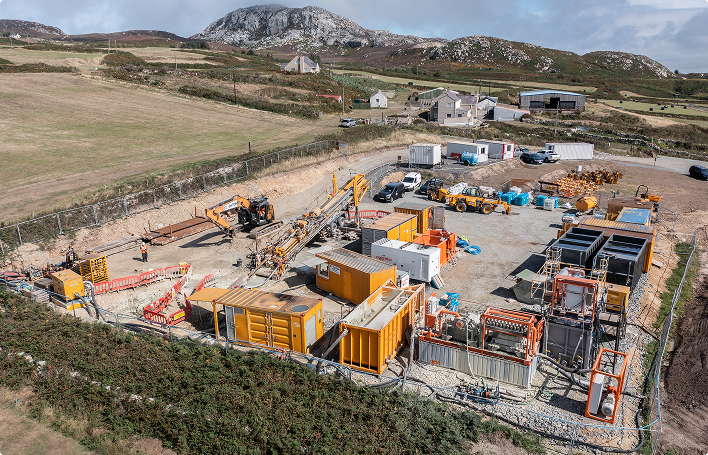

Project Union is National Gas’ project to create a 1,500-mile core hydrogen network for Britain as part of the 5,000-mile National Transmission System (NTS), which has transported gas across Great Britain for 60 years.
Its aim is to grow the UK’s hydrogen economy by driving home-grown hydrogen production through repurposing existing natural gas pipelines and ensuring continued supply through hydrogen storage, helping to increase the country’s energy security.
Hydrogen has been chosen for its ability to provide hard-to-decarbonise industries with a low carbon alternative, helping to cut emissions. The shift will require significant network capacity, with the UK’s hydrogen strategy estimating that 250-460 Terawatt-hours (TWh) of hydrogen could be needed to achieve net zero in 2050.
Project Union will connect industry across Teesside, the Humber region, and Grangemouth in the East, and link up with Southampton, the North West, and South Wales while connecting to strategic production sites including at St Fergus in Scotland.
This involves sites including Bacton and Easington, where Stockton Group has been facilitating pipeline installation through our provision of specialist Horizontal Directional Drilling (HDD) services and cofferdam construction.
Eventually, this transmission network will transport 100% hydrogen across Great Britain.
Alongside Project Union, another strategy going forward involves ‘blending’ - mixing hydrogen with natural gas in the National Transmission System (NTS). Initial blends of up to 5% have been proven to work with minimal impacts to the network, and require nominal changes for customers. This creates an immediate route to market for hydrogen producers, creating less selling uncertainty, with every NTS user becoming a potential hydrogen customer.
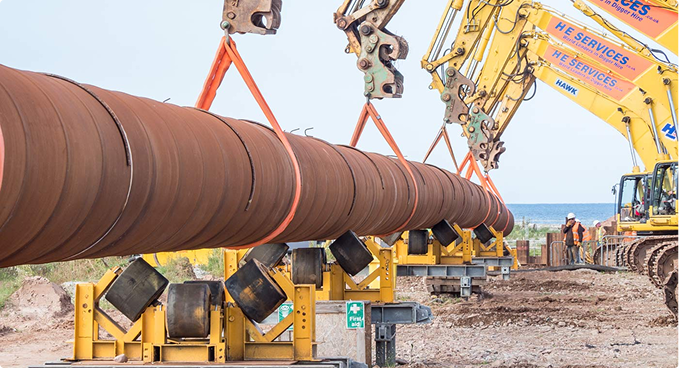
With a key part of the UK’s hydrogen strategy centring around repurposing existing pipelines, it’s important pipeline contractors familiarise themselves with the FutureGrid programme, which is replicating every part of gas transmission to test safety.
This micro-transmission network uses recently decommissioned NTS assets to assess the effects of hydrogen on pipes, assets, and the operation of the network, to develop processes and safety standards that will allow Project Union to run a safe and reliable hydrogen transmission network.
Tests have been carried out using blends of 2%, 5%, and 20% hydrogen with natural gas, as well as 100% hydrogen, and have tested material permeation, pipe coating and cathodic protection, flanges, asset leaks, and ruptures.
Testing found no detectable permeation in steel pipes after holding hydrogen at 70 bar for 40 days, while two principle flange types, ring-type joint (RTJ) and raised face (RF) were found to fully contain both natural gas and hydrogen. This provides evidence that existing steel pipeline infrastructure and common flange types are suitable for hydrogen transportation, requiring just minimal upgrades.
This was proven in practice by SGN (formerly Scotia Gas Network), which safely repurposed a 30km stretch of the UK’s Local Transmission System (LTS), which brings gas from the national system to homes, businesses, and industries in the local communities.
The pipeline stretch, which runs between Grangemouth and Edinburgh in Scotland forms the basis of the LTS Futures project, which is creating a blueprint for repurposing the entire 11,600km LTS pipeline to carry hydrogen.
September 2025 saw operational tasks including hot works (welding and drilling into the live pipeline to create a new connection) and flow stopping (isolating the flow of hydrogen in the pipe) completed, proving they can be performed on high-pressure pipelines transporting hydrogen.
These tests and pilot projects have proven that hydrogen can be carried safely across the UK, giving pipeline contractors the assurance needed to confidently work on hydrogen infrastructure projects. While international standards for the transportation of hydrogen through pipelines are yet to be firmly in place, these pilots are an important step in setting the blueprint for safety going forward

Delivering a safe and efficient hydrogen network for the UK goes beyond just getting critical infrastructure in place – it also involves developing the skills of the workforce across the entire supply chain.
The Hydrogen Skills Alliance (HSA) and the Department for Energy Security and Net Zero (DESNZ) launched the Hydrogen and Carbon Capture Skills Accelerator in October 2025, to tackle skills shortages, identifying existing capabilities in two pilot regions to build a clearer picture of where investment is needed.
Pipeline contractors should focus on upskilling roles like welders, to reflect the challenges of working with hydrogen, including preventing risks like hydrogen embrittlement which makes metal prone to cracking or failure.
By keeping up to date with programmes like Project Union and Future Grid, pipeline contractors can identify opportunities to contribute to the transition to a hydrogen economy, while preparing for the safety standards associated with working with hydrogen infrastructure.
At Stockton Group, we can facilitate the installation and expansion of hydrogen pipelines through our trenchless drilling techniques, minimising environmental impact. Get in touch with us today if you’d like us to be a part of your journey in bringing the UK one step further to net zero and increased energy security.
The UK hydrogen strategy sets out a roadmap for how the hydrogen economy can evolve and scale up over the next decade, covering production, networks, and storage across the country. It outlines how hydrogen can enhance energy security and help to decarbonise UK industries.
Project Union is National Gas’ project, involving creating a 1,500-mile hydrogen pipeline network to transport 100% hydrogen across Great Britain.
Hydrogen blending is the process of mixing hydrogen with natural gas to introduce it into existing gas networks and prove its safety and viability for household use.
There hasn’t been any commitment to full hydrogen replacement from the UK Government yet, however infrastructure is being continually developed to repurpose pipelines for future 100% hydrogen use.
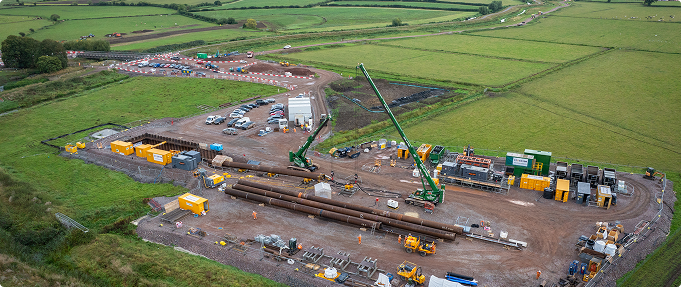
FutureGrid is National Gas’ hydrogen test facility in Cumbria, which uses decommissioned gas pipelines to test the safe transport of hydrogen and hydrogen/natural gas blends.
LTS Futures is a project led by gas network company SGN, where 30km of an existing pipeline in the Local Transmission System (LTS) in Scotland was repurposed to transport 100% hydrogen, creating a blueprint for the entire 11,600km LTS network.

