



Detailed design process results in world first approach to solving the problems presented
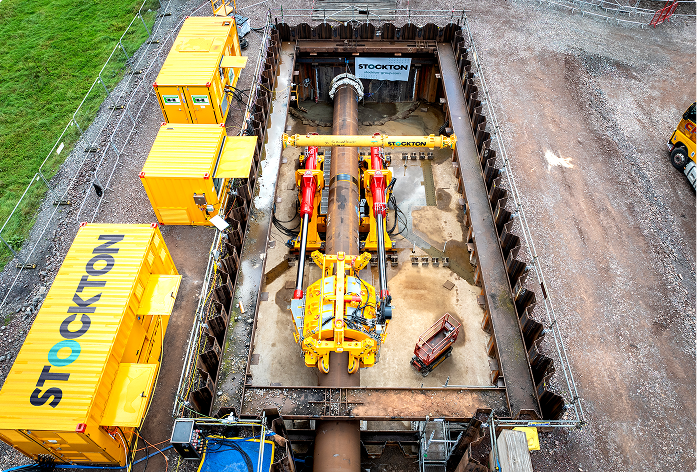
Production of weld procedures to BS EN ISO 15614: 2012, specifically for the project utilising a partial penetration weld to guarantee no intrusions. Temporary works designs for two sheet-piled pits measuring 5m deep by 7.5m wide and 20m long. Over-bend design utilising rollers on temporary towers as an engineered solution to reduce plant and labour on site.
World’s first offshore disconnect of a Direct Pipe® system, utilising a bulkhead door within the TBM to ensure it remained operational for the second drive.

Environmental challenges
Due to the geological constraints, Direct Pipe® – a hybrid micro-tunnelling and HDD system that lines the tunnel as it advances – was selected as the most suitable methodology, as it is capable of operating through a multitude of ground conditions.
Nexans Norway AS provided entry and exit locations, which then dictated the 500 tonne Direct Pipe® system as it is capable of the required 450m landfall distance.
For the BOWL landfall, a 48” steel pipe was used as the liner, unlike most pipe jacks, which utilise concrete rings. This enables the entire tunnel to be retracted to the surface if required.
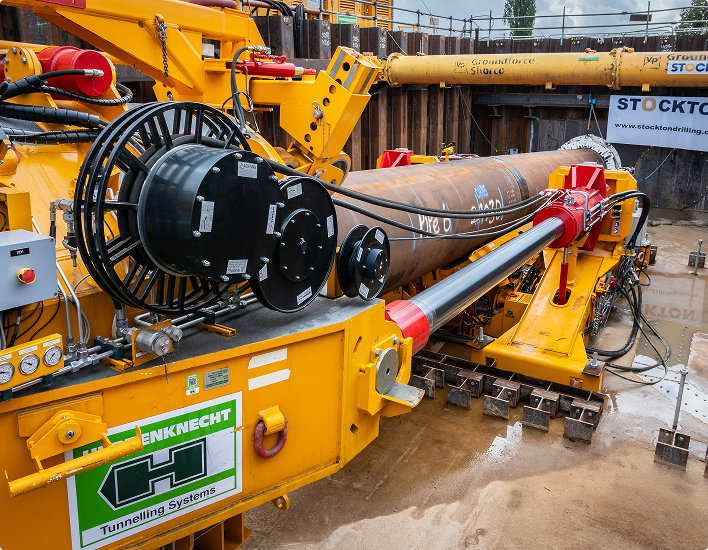
When using the Direct Pipe® method, the entire tunnelling infrastructure is on one side of the obstacle to be drilled under. This makes the technology ideally suited for sea outfalls/landfalls, with the pipeline pushed directly from land out to sea. Once the required length has been achieved, the AVN machine is recovered from sea. Starting at the launch pit, the spoil was excavated by a fluid-supported Herrenknecht microtunnelling machine (AVN).
The pipeline was laid out above ground on roller blocks and pushed into the borehole during drilling. A pipe thruster delivers the required thrust force, pushing the mirco-tunnelling machine and the pipeline in 5m steps forward, with a force of up to 500 tonnes.
Industry first recovery of tunnel boring machine
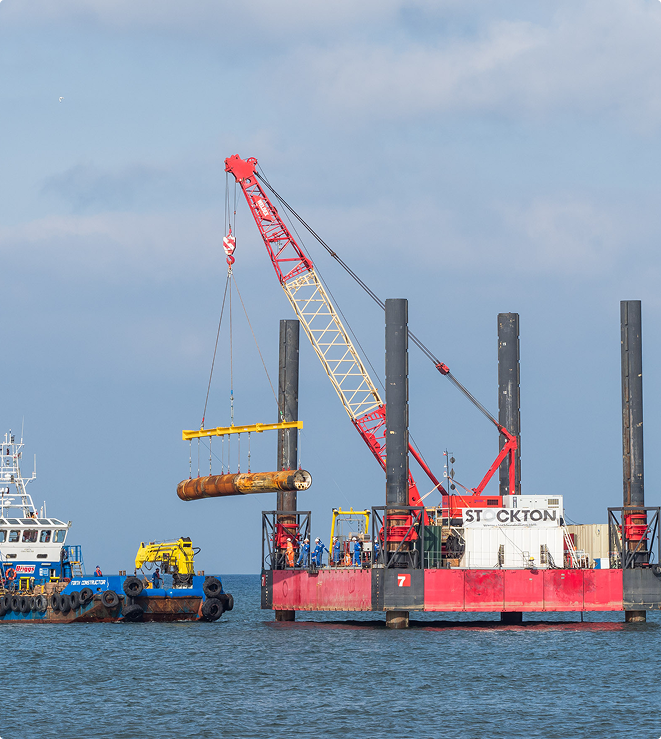
In a world-first, the TBM was recovered from sea utilising a remote disconnect module. Divers were then dispatched to the TBM’s location, attaching a lifting beam to the TBM itself. A crane, placed on a jack-up barge, then lifted the TBM out of the water, placing it on a multi-cat for return to Buckie harbour. This process was further complicated by the low depth of water in the area.
Do you have a drilling or pipeline project you’d like to talk about?
Contact STOCKTON GROUP today to chat about how we can help